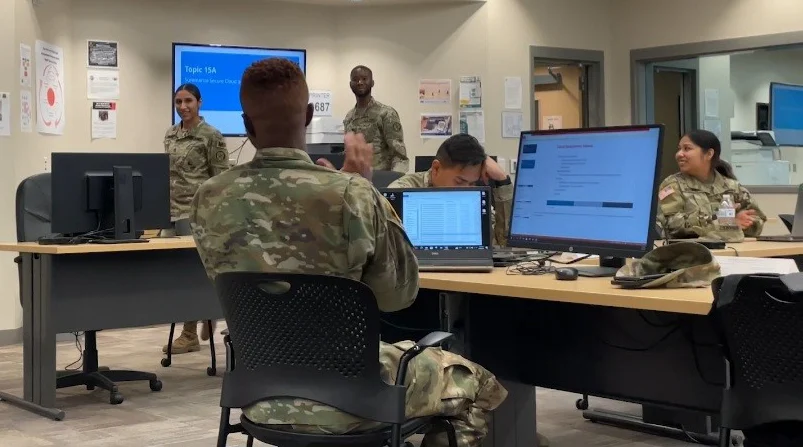
Camp Williams

All individuals aged 16 and older must present valid photo identification upon entry to Camp Williams. This policy is in place to maintain enhanced security standards. Individuals without a compliant photo ID will require an authorized escort. Please ensure you have proper identification ready before arriving at the installation.
Camp W.G. Williams History

""

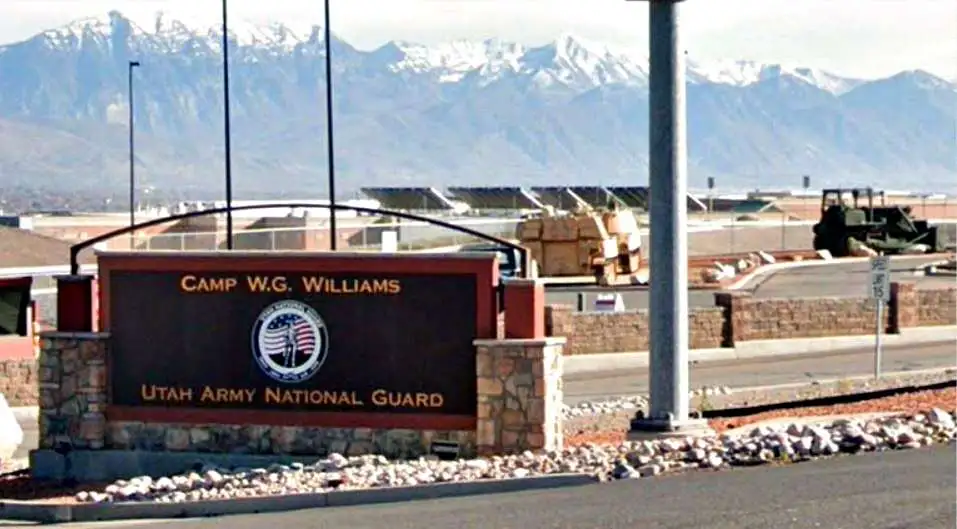
640th Regiment, Regional Training Institute (RTI)

The RTI provides training and support to all U.S. Army components with the goal of developing leaders through professional education and training in multiple disciplines: 1st BN - NCOA, 2nd BN - Signal, 3rd BN - Field Artillery, and 4th BN - Military Intelligence.
Learn more
""

Morale, Welfare, and Recreation (MWR)

The MWR program provides support for Soldiers and Airmen through discount tickets, support services on Camp Williams, lodging, RV storage, venue rentals, and more. 
Learn more
""

Summer Recreation Programs

MWR summer programs offer a variety of activities to support team building, sports camps, corporate training, family reunions, church gatherings, and more! We’d love to host your group and provide a program full of fun!

Learn more
""

Utah National Guard Kids (UTNG) Military Youth Programs

UTNG Youth Programs puts on a myriad of functions throughout the year for military kids, including various camps, classes, and workshops. Programs focus on leadership, resiliency, education, and fun.
Learn more

Contact Information

  • POC: SFC Joey Whaley

  • Address

    17800 South Redwood Road, Bldg 6220
    Bluffdale, Utah 84065

  • Units requesting TCCC courses, BLS, ACLS, PALS will go through RFMSS or will need to submit a training request form to the MSTC’S inbox:

The Medical Simulation Training Center at Camp Williams

For the first responder, the line between chaos and control is measured in seconds and skill. The Utah National Guard's Medical Simulation Training Center (MSTC) at Camp Williams offers a unique and powerful opportunity for military and civilian agencies—including EMS, Fire, Law Enforcement, and SWAT teams—to elevate their operational readiness. By training in a state-of-the-art facility designed to replicate the intensity of real-world crises, your teams can master the skills that save lives.

A Force-Multiplier for First Responders

Training at the MSTC provides a distinct advantage, bridging the gap between theoretical knowledge and practical application in high-stakes environments. The benefits for your agency are tangible, immediate, and critical for mission success.

A Facility Engineered for Realism

The MSTC is not a conventional training space; it is an immersive tactical environment built to challenge and forge elite responders.

The facility’s design includes extra-wide hallways and exterior double doors, allowing for the realistic movement of casualties on litters and gurneys for practicing patient transport under stress, from the point of injury to a trauma bay. Its location adjacent to large, open fields is ideal for integrating air and ground medical transport, allowing your teams to seamlessly practice hand-offs with helicopters and ground ambulances.

Inside, advanced patient simulators breathe, bleed, and react to treatment in real-time, forcing trainees to manage life-threatening injuries under immense pressure. This hyper-realistic experience is amplified by full sensory immersion, including programmable smoke, combat sound effects, and strobing lights, creating an environment that rigorously tests both skills and nerve.

Core Capabilities for the Modern First Responder

Our training capabilities are designed to be directly relevant to the challenges faced by civilian first responders, from routine trauma to large-scale disaster response.

  • Advanced Patient Simulators: Practice interventions for trauma and medical emergencies on the most advanced, lifelike simulators available.
  • Tactical Casualty Care (TCCC/TECC): We provide training in TCCC, which establishes a strong foundation for the TECC principles used by military and civilian tactical medical providers.
  • Realistic Scenario-Based Learning: Engage in scenarios mirroring active threat events, mass casualty incidents, and complex rescue operations.
  • Skills Sustainment & Certification: Utilize our facility for hands-on skills sustainment and to meet certification requirements. The center plans to pursue accreditation for National Registry EMT refreshers.
  • Team Coordination & Communication: Perfect inter-agency communication and teamwork, a critical component of successful incident response.